|
|
|
Kipling's Bundi |
|
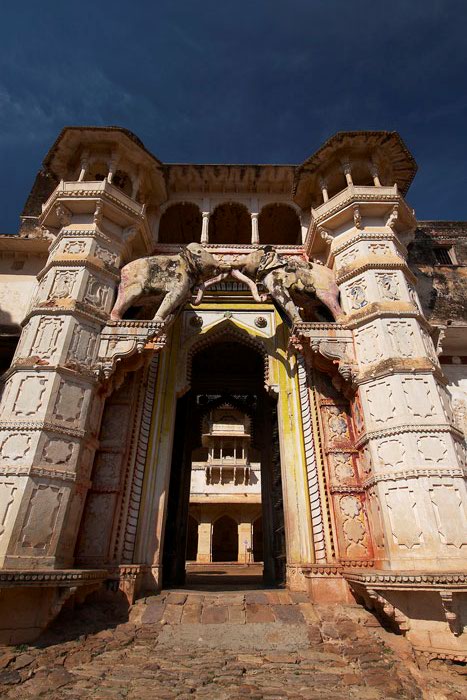
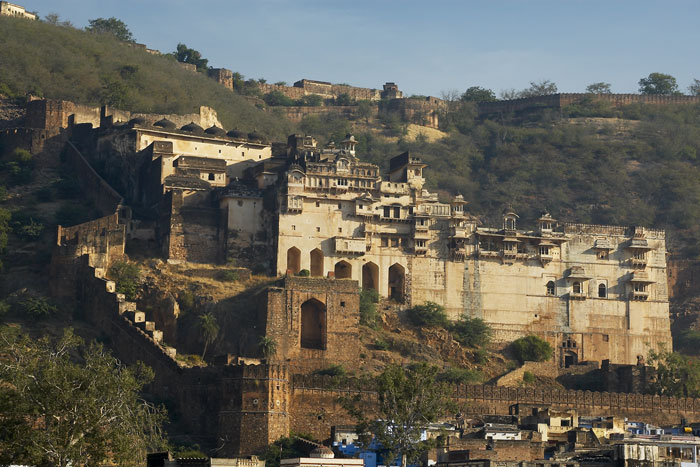
Hotel Haveli Braj Bhushanjee invites you to explore the rich heritage and culture of BUNDI . Your every moment will be caught and held in its history. Bundi is a dream remembered. Nestling at the footsteps of a large craggy hill, Bundi, named after Bunda Meena ,was established by Rao Deva in 1241 A.D. The large dominating complex of fort and palaces, hugging the steep hillside, is mainly made of two- Garh-Palace and Taragarh-Fort.
|
|
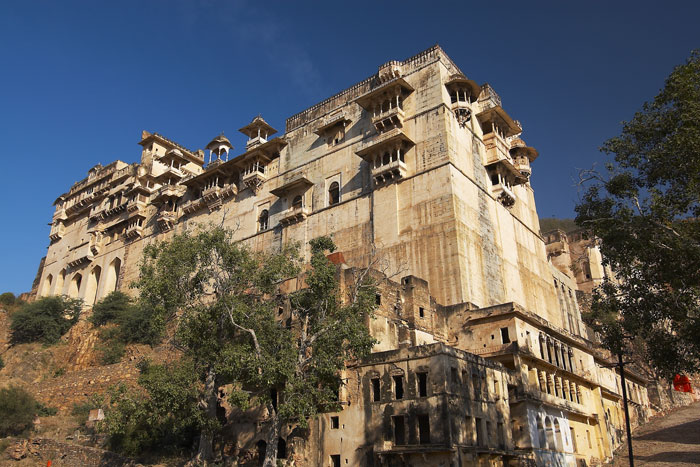
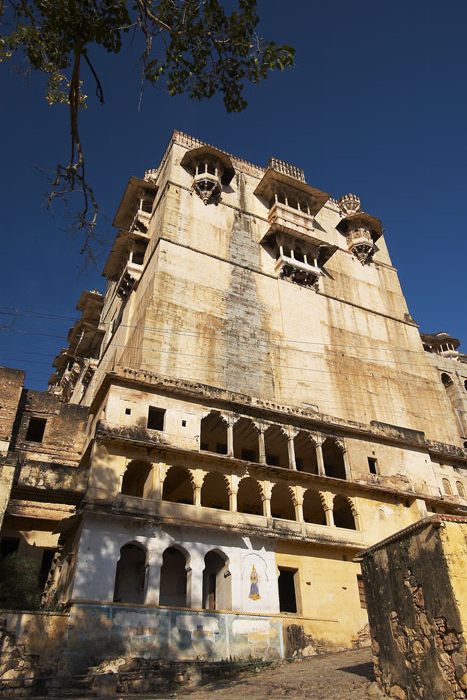
| The vast and confusing creamy stone and stucco buildings climb up the burnt rocky hillside_ "an avalanche of masonry ready to rush down and block the gorge " as Kipling wrote-a stern substructure began in the 13th century and then flowering into series of palaces, with a fretted skyline of cupola, loggias and canopies. The grim battlemented walls march out to encircle not only the town but the surrounding hills, and end at the impregnable Taragarh fort on the top which provided a final refuge. |
|
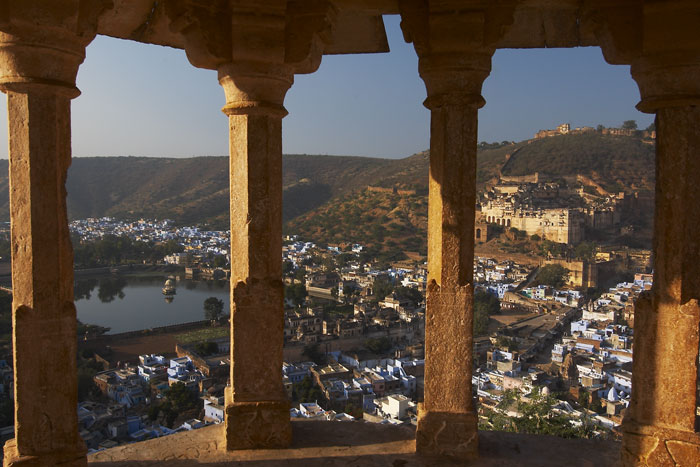
Highway road from Kota, Ajmer, Jaipur and Udaipur no longer runs through the crowded center of the town. Instead it gives you a series of spectacular panoramas around, then across the town up to the fortress, and finally the classic view of the fortress-palace rising above its lake. The view over the town makes a remarkable cubist picture, with intense blue-whites and gray-whites small houses broken only by sad-colored stucco of mysterious larger structures. |
|
There are no intrusive modern buildings, so nothing competes with the great palace complex on the hillside which watches over the town.
James Tod wrote about Bundi in his celebrated Annals and Antiquities of Rajasthan (1829) "The coup d'oeil of the castellated palace of Bundi, from which ever side you approach it, is perhaps the most striking in India". Bundi is, in a sense, a palace - town and as befits a center famous for its paintings in 17th and 18th centuries, the town still gives the feeling of having been the seat of a court.
It is sufficient not to mention more about this town except to quote what James Tod has written(1920) : "It is an aggregate of palaces, each having the name of its founder; and yet the whole so well harmonises; and the character of the architecture is so uniform, that its breaks or fantasies appear only to rise from the peculiarity of the position, and serve to diversify its beauty..... Whoever has seen the palace of Bundi, can easily picture to himself the hanging gardens of Semiramis." |
| |
|
|
|
Haveli Braj Bhushanjee
Below Palace
Opp. Ayurvedic Hospital,
BUNDI ( Rajasthan), India
Mobile : +91 9783355866 / 9783355865
E-mail: havelibb@gmail.com.com | | | |